
Materials & Details
How to Light Custom Millwork Without Glare
Decide what to light, where to hide the source, and how to test it before cabinetry goes into production.
Decide what should catch your eye
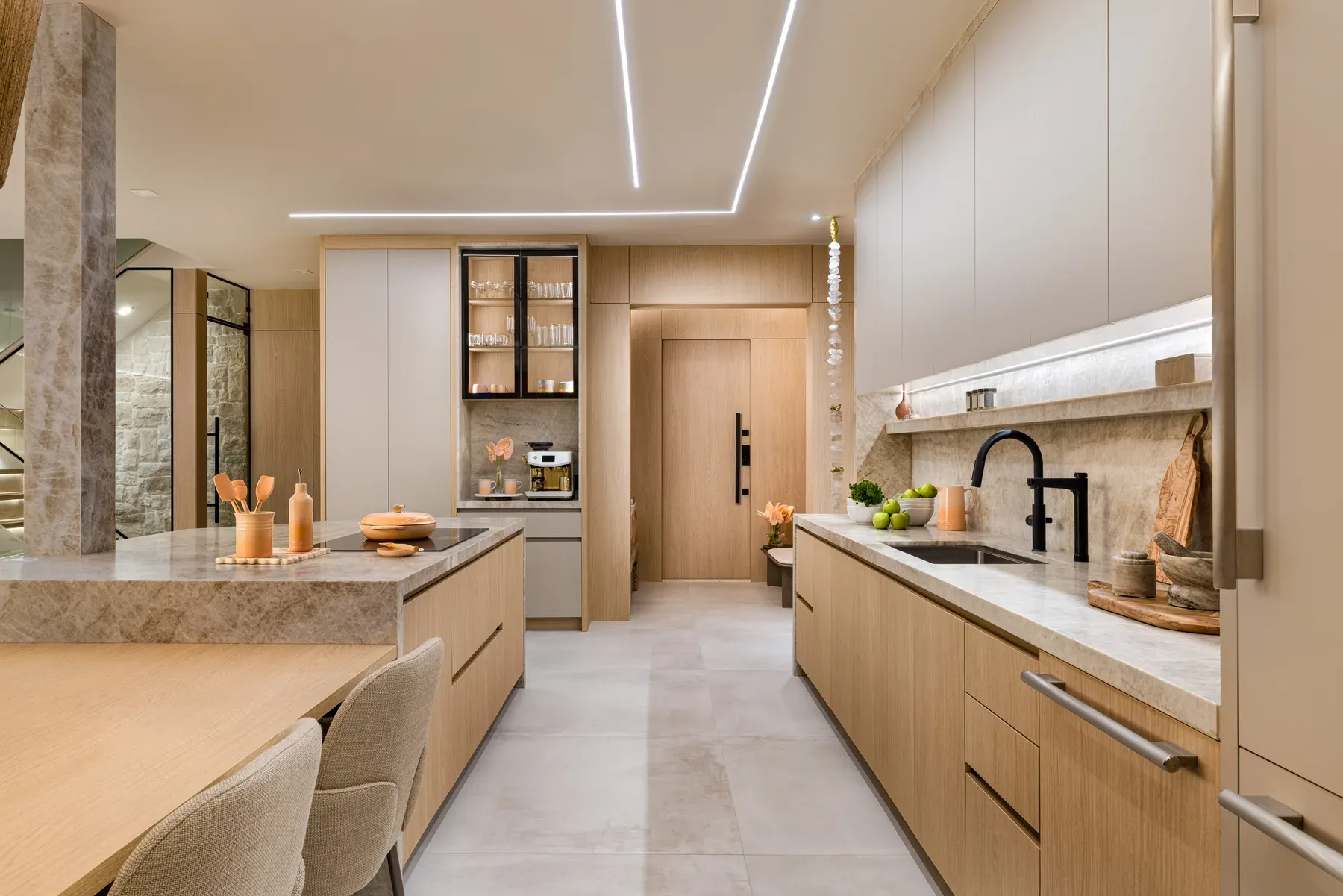
When I plan a kitchen, I ask what needs working light and what deserves to be highlighted. The counter where you chop or make coffee needs light where your hands are. A display cabinet can be softer, with light aimed at the shelves instead of the room.
Home A&A shows both ideas in one space. Light under the upper cabinets falls across the work surface, while the glass-front cabinet has its own lighting. Each has a different job, and the warm wood cabinetry ties the kitchen together.
Check for glare where you actually stand or sit
Ask your designer and electrician where the strip, diffuser, wiring and driver will go before the cabinetry is made. At a counter, stand where you normally work and see if you can spot the light source or its reflection on the stone. With a glass-front display, look from the main walking path as well. For a media wall, do the same check from the sofa. A recessed channel can help hide the source, but the location and angle still matter.
Test the light on your actual finish samples
I like to hold the wood, paint and metal samples next to one another and compare them in daylight and under the proposed fixture. Ask to see the light dimmed, too. The U.S. Department of Energy notes that LEDs with the same stated color temperature can still render colors differently. Use the Kelvin number as a starting point, then make the decision by looking at the actual samples.
If you’re building a library, bar or media wall in Miami or elsewhere in South Florida, start with the cabinet design and lighting together. Explore our custom millwork services.